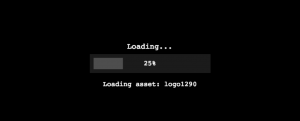
Create a Loading Screen in Phaser 3 – Web Games Tutorial
Have you ever played a game where you met with a blank, black screen while things loaded? Sometimes, there isn’t getting around loading screens for your game, especially as your
Have you ever played a game where you met with a blank, black screen while things loaded? Sometimes, there isn’t getting around loading screens for your game, especially as your
In this multipart tutorial, we will be using Phaser 3 and Socket.io to create a simple multiplayer game. For our multiplayer game, we will follow the client-server game architecture. If
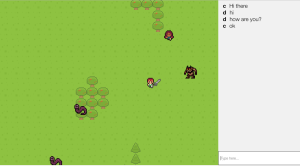
In Parts 1 and 2 of this tutorial series, we started building our Phaser 3 MMORPG. In Part 2, we did the following: Refactored the client-side logic of our game.
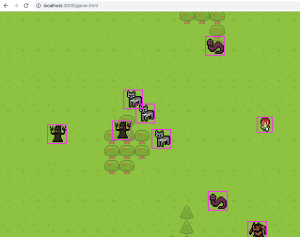
At the beginning of this tutorial series, we started building our Phaser 3 MMORPG. In Part 1, we did the following: We set up the basic project and installed the
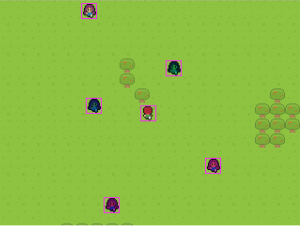
In this multi-part tutorial series, we will be creating a simple Phaser 3 MMORPG. This game will feature simple gameplay that will allow players to wander in a single area
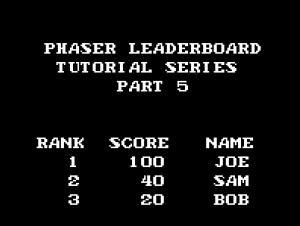
In Part 4 of this tutorial series, we continued working on our Phaser leaderboard and we did the following: Updated our server to serve static files. Worked on the client
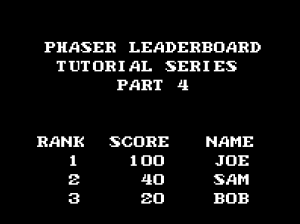
In Part 3 of this tutorial series, we continued working on our Express server. We did the following: Updated our endpoints to store, retrieve, and update data in MongoDB. Used
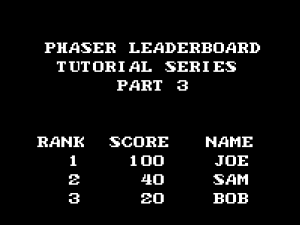
In Part 2 of this tutorial series, we continued working on our Express server. We did the following: Added the rest of the endpoints that will be needed for our
In the beginning of this tutorial series, we started building our Node.js + Express server that will be used for user authentication and for serving our client-side Phaser game. In
In this multi-part tutorial, we will be creating a simple Phaser 3 game that has authentication and a leaderboard. For our game, we are going to create a user sign

In Part 1 and Part 2 of this tutorial, we continued building a Phaser project template that you can reuse and extend in any future project you work on. In
In Part 1 of this tutorial, we started building a Phaser project template that you can reuse and extend in any future project you work on. To begin with we:
In a few of our previous tutorials, we showed you how to create a multiplayer game using Phaser and Node.js. If you missed these tutorials you can find them here:

In Part 1 of this tutorial, we created our Node.js server, set up a basic Phaser game, and set up our server to run Phaser in headless mode, and in
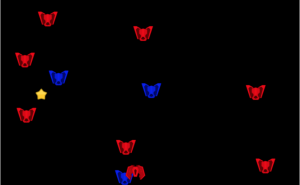
In Part 1 of this tutorial, we created our Node.js server, set up a basic Phaser game, and set up our server to run Phaser in headless mode. If you
In this multi-part tutorial, we will be creating a simple multiplayer game with Phaser and Socket.io. For our multiplayer game, we will follow the client-server game architecture and we will
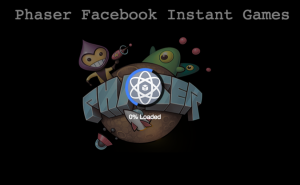
Phaser is a fantastic HTML5 game framework that works on both desktop and mobile web browsers. Not only this, it is constantly getting updates and new features. One of the
The goal of this tutorial is to help you create a Phaser template that you will be able to reuse and extend in any future project you work on. The