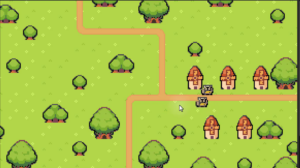
Godot Top-Down Movement Tutorial: Overworld Party Movement
Build Godot top-down movement: a WASD-controlled overworld battler, tilemap collisions, party followers with smooth lerp movement, and collision layer filtering.
Build Godot top-down movement: a WASD-controlled overworld battler, tilemap collisions, party followers with smooth lerp movement, and collision layer filtering.
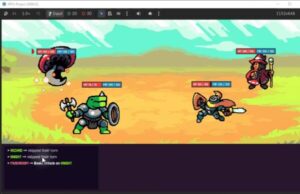
Build Godot enemy AI with ordered AIRule resources: health and status conditions, chance checks, target queries, and a basic-attack fallback in your JRPG battles.
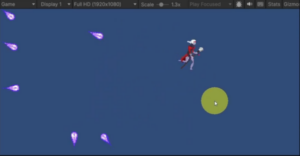
Learn Unity projectile pooling for a bullet hell game. Build player and enemy pools, reset recycled bullets, and pass pool references through an enemy spawner.
Build Unity 2D player movement for a bullet hell game, prepare pixel-art sprites, and connect idle and run animations with responsive Animator transitions.
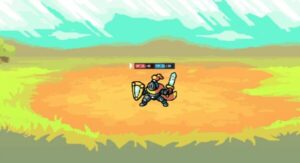
Build a Godot turn-based battle battler: animated sprite, HP and MP header, BattlerData resource, and a Battler script with damage, healing, and mana.

Learn how to build a Godot card system with reusable resources, interactive visuals, topmost-card detection, smooth hovering, and responsive drag controls.
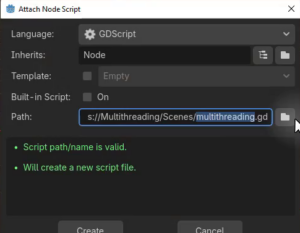
Learn Godot multithreading in this hands-on tutorial: thread safety rules, the Thread class, and a WorkerThreadPool benchmark that halves processing time.

Learn the Godot service locator pattern: build one autoload hub that registers, retrieves, and swaps services like audio and particle managers.

Learn Godot utility AI step by step: score actions with considerations, have a Brain pick the best action each frame, and build your autonomous villagers.

Learn Godot crowd spawning for a hypercasual game: calculate circular formations, spawn or remove movers, and position each character around a shared target.

Learn Godot 3D animation from a Unity developer’s perspective. Use AnimationPlayer to add keyframes, smooth a ball’s motion, and enable automatic playback.

Build Godot mouse look with GDScript. Compare Unity scripting concepts, capture the cursor, read mouse motion, and clamp a first-person camera’s vertical angle.

Learn Godot materials with Unity examples. Create glossy, metallic, and glowing surfaces, then add a sky, lighting, reflections, fog, and ambient occlusion.
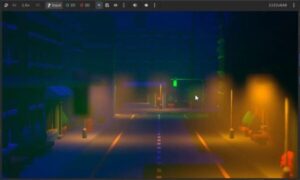
Build a Godot cinematic camera with target tracking, handheld shake, and depth of field. Set up a camera manager to switch cutscene viewpoints by their IDs.

Learn how to make games with Muse Wonder in Godot using OpenCode. Plan a fantasy strategy game, refine its visuals and exploration, and review the test cost.

Build a Godot fighting game camera with smooth following, distance-based zoom, damage-triggered shake, and a two-player HUD that updates each fighter’s health.

Learn how to make games with Mistral using OpenCode, Blender and Godot. Plan a monster-truck game, test its limits, and see how Codex rebuilds the result.

Build a Godot input buffer for a fighting game. Set up fighter scenes, read separate player inputs, and store recent actions in a 20-frame rolling history.